I have some exciting news to share with everyone today! Part of my job is to advise fellow comics retailers on which manga they might be interested in stocking in their stores. Because the demand for this service has gotten so high and is causing me to cross-post in several groups, I’ve decided to create a mailing list! While it will be geared toward comic shop retailers, certainly anyone who would like to see my monthly thoughts on upcoming titles is welcome to sign up. I just ask that everyone bear with me as I slowly learn how to use MailChimp to its fullest potential, haha. The link to sign up is here, and I’ll be posting it in several locations over the course of today so that it reaches everyone who might want it!
In other news, I haven’t written much lately, but I assure you all that I’ve been reading a ton. I’ve been on a bit of a shojo romcom kick lately; I read seven volumes of Waiting For Spring the other day, and have slowly been working my way through High School Debut. I’m not sure why, but every now and then I just feel the need to read something sweet and positive, and shojo romances really fill that requirement for me.
My last post was a review of a middle reader graphic novel that isn’t a manga. This doesn’t mean I’ve abandoned manga (obviously), but I do want to mention that I probably will be doing more non-manga reviews in the future. I believe that middle reader and young adult graphic novels are among the best (and best-selling) graphic works right now, and I would be remiss if I didn’t mention them, especially as so many of them have been influenced by manga and are being read alongside manga. Media, after all, does not exist in a bubble. Works for young audiences are important right now, creating many new readers and strengthening visual literacy.
And that’s all to report right now! Just some little updates to tide you over until I post again — or until you sign up for my regular emails!
Author: admin
Ghosts & Grief: A Sheets Review
I’m a sucker for friendly ghost stories. As a kid, I was desperate to meet a ghost, dragging my best friend through her 300+ year-old house with a tape recorder ready to catch some EVP or find cold spots. I was also raised by my single mother and my tailor grandparents — so Brenna Thummler’s new middle reader graphic novel, Sheets, speaks to me on many levels.

Marjorie Glatt has recently lost her mother, and with her father overwhelmed by grief and depression, she is left to manage the family’s laundromat all on her own. Between that, her school obligations, her little brother, and their overbearing neighbor Mr. Saubertuck, Marjorie feels overwhelmed and adrift. Similarly adrift, a ghost named Wendell wanders into the Glatt Laundromat after his escape from the Land of Ghosts. Prone to mischief, Wendell turns the laundromat upside down one night, hardly endearing himself to Marjorie, who very much does not believe in ghosts. But with Mr. Saubertuck putting the pressure on Marjorie to give up her family’s land in order for him to build his new spa, Wendell and his fellow ghosts might be her only hope of keeping the business…afloat.
It is no secret that being a young teen is difficult; the chaos and uncertainty of puberty are exacerbated when a child is thrown into a tragedy like the death of a parent, or a divorce, or a debilitating illness. But while we try to shield our children from the harm of the world, we cannot prevent every bad thing from occurring. I sometimes hear complaints about media that depict untrustworthy adults, but the reality is that there are plenty of adults — even ones who mean well — who are not always up to the task of making things work so that their children don’t have to suffer. Sheets portrays that relationship well, with Marjorie’s father very clearly caring about his children only as far as his depression will allow; and those who have ever suffered from depression, whether chronic or episodic, will relate to the empty numbness that Mr. Glatt experiences.
Despite the heavy material, this book is not a downer! Thummler’s artwork conjures up the wonder of childhood autumns, each page reminiscent of faded photo memories. The action switched between the real world and the Land of Ghosts with a simple palette shift. The ending is positive without feeling saccharine, as the themes of grief, fantasy, and friendship are all tied together. A satisfying, engaging read that takes about as long as doing a load of laundry, perfect for the kid whose best friend is a ghost, or who would like some not-too-scary reading material for the Halloween season.
Sheets, by Brenna Thummler, is now available in print from Lion Forge.
"I'm Just A Gun-Totin' Weather Girl"
[HEADS UP: There are some very minor spoilers for the Cowboy Bebop series in this piece, so if that sort of thing bothers you I don’t recommend reading this!]
Cowboy Bebop is one of those series that literally every dude between the ages of 25-35 tries to recommend to every casual nerd. It has the distinction of being one of the best examples of anime, and of dubbed anime, from a very specific point in time, so people latch on to it as a classic and insist on acting completely scandalized when someone hasn’t seen it or doesn’t like it.
It’s that kind of behavior that I’ve mentioned before that I completely hate. And yet…I love Bebop. In fact, I recently convinced my coworker to watch the whole series — not because I told him he had to! But because he’s been enjoying noir comics lately, and I thought some of the themes would scratch a similar itch for him. He’s enjoying it thus far, I’m happy to report.
In general, I’m content to leave my discussions about Bebop in the past, or among like-minded friends. But on Thursday I had the incredible experience of being able to see the movie in theatres, and I can’t stop reflecting on how much I enjoyed it. I’ve seen the movie before, of course, but when it first hit US shores, it wasn’t in any theatres near me. At age 13, living in the middle of Connecticut, there was no option for me to see it that didn’t involve a multi-hour trip to either New York or Boston. I was heartbroken.
But I was finally able to live out my dream. I bought my ticket nearly a month in advance, I got to the theatre early, I bought way too much popcorn for way too much money, and I had an excellent time of it.
Before the movie, instead of endless previews or ads for other events, there was a short Q&A session with the dub voice actors. It lasted maybe ten or fiifteen minutes, but it was a nice little reintroduction to the characters and the movie specifically. It was amazing to hear how the VAs didn’t really alter their voices overmuch for their dub performances, so that these incredibly recognizable voices were coming out of the mouths of people I’ve seen before, but less frequently than their animated counterparts. Getting the little bit of background, and learning about the excitement of the actors to have worked on this project, definitely helped set the mood for the feature presentation.
Cowboy Bebop‘s opening sequence and song, “Tank!” are iconic at this point; for me, so too is the opening credit roll of the film, with its black and white panorama of Martian city life (that always struck me as looking a lot like New York City life). Whole books have been written about Yoko Kanno’s scoring prowess, and the entire Bebop OST is a musical masterpiece; but I do especially love the movie soundtrack and the film’s sanguine opener, “Ask DNA.” This series is one that is based firmly around music and mood — as themes, not just as enhancements to the story. The film is no different.
For those of you who are unfamiliar with the plot, Cowboy Bebop: Knockin’ On Heaven’s Door takes place before the end of the series, but after we have already been introduced to all the core cast. The crew of the Bebop is on Mars, following small-fry bounties and trying to keep themselves from starving. Spike and Jet go after some small-time convenience store robbers, while Faye ropes Ed into tracking down info on a hacker. Everything goes sideways when Faye witnesses a terrorist bombing and Mars is suddenly beseiged by a completely inexplicable viral warfare.
As our intrepid heroes dive further and further into this case, they have to untie the threads of military experimentation, memory loss, doomed romance, global terrorism, and a crooked pharmaceutical company. It seems like a lot, but it all comes together in a seamless tapestry, peppered with the usual humor and a lot of really adorable jack-o-lanterns.
There was a practice, when I was young, of hating female characters in anime because their presence either got in the way of your gay ships, or got in the way of your two-dimensional love interests. Faye Valentine is a ripe subject for this, an easy target in her tiny yellow outfit, with her gambling vice and her vanity. But something always prevented me from hating her outright, and it wasn’t until the last decade or so that I realized I actually really love her. In the film, she’s the first person to witness Vincent Volaju’s terrorist attack; she’s the one who takes the initiative to go after the bounty; and she’s the one who remains defiant in an otherwise hopeless situation. It is poignant, we later realize, that she should be the one to have a conversation with Vincent about lost memories — a touch that I’m not sure I had noticed until this most recent viewing. She is a stark contrast to Spike’s Julia, the perfect, mild-mannered (though disloyal) woman who also happens to look good in a catsuit.

The movie reminds me, also, that the things I like best about Cowboy Bebop are all the things that don’t directly involve Spike’s eyeroll-worthy hang-up about his girlfriend and his best friend having a shag. I love the adventure, the puzzle-solving, the use of music, the references to old film, the late-90s vision of a terraformed future, the comedy, the comraderie…the things that set Cowboy Bebop apart are the ways in which it defies the conventions of science-fiction while placing it self firmly within that boundary. There is a sort of self-aware pseudo-philosophical thread running through everything, including the movie, that feels more like a nod to the spaghetti westerns of a bygone era than an actual moral the audience is expected to believe. But it’s such a loving and respectful nod that it makes the heroism of those once-worshipped cowboys seem worthy of consideration.
I don’t really expect every anime fan to lose their minds about Cowboy Bebop these days, not when there’s such a wealth of animated media at everyone’s fingertips, and new and incredible works are being made all the time. But I’m glad, once again, to have watched it when it was still so fresh and new, and to be able to feel so strongly about it even to this day. No matter what I say, I can’t deny that I’m completely taken in every time I hear those first audacious horns blasting, that deep base thrumming over the James Bond-esque opening sequence. I’m completely taken in by the warmth of the cel animation, the absurd theatricality of film references and seamless blending of old film genres. And damn it if I’m not a sucker for every episode’s distinct musical theme.
Also, Cowboy Bebop is like…the one anime my mom would occasionally catch snippets of an genuinely enjoy, so that’s gotta be good for something, right?
Some Brief Thoughts On Writing
Hello, everyone! SO sorry that I haven’t written for a while. I was away visiting family last weekend, and then I became very busy with both my day job and the review work that I do on the side. As such, I haven’t had much time to read any manga! My husband and I have made our way through most of the Wotakoi anime, though, and it’s so good…definitely going to be disappointed when we finish.
I had a great time on the Manga Machinations podcast a couple weeks back. If you haven’t had a chance to check that out, I’d urge you again to find the episode at mangamachinations.tumblr.com. I’ve been on panels at conventions several times in the past, so doing a podcast was a bit similar…but it was definitely novel to be the center of attention!
Despite not updating here, I have been doing a great deal of writing, both personal and professional, and thinking a lot about how much I enjoy it. I’ve always liked writing, and my parents and teachers and peers always made a point of telling me I was good at it. But for a long time, I fretted over whether or not I was good enough. These days, I worry less about that and more about getting thoughts down onto paper (or computer screen), and I do feel that I’m able to convey what I mean to say more often than not.
I mentioned that I do paid review work; it’s uncredited, so I don’t have the ability to claim it as my own. But this kind of very structured writing, while I initially thought of it as a chore, has actually been very good for me. It allows me to separate out writing as a tool and writing as an art. I like being creative and writing creative reviews here, but it’s also important to be able to practice brevity and clarity that my personal writing might eschew for more whimsy or flair.
Basically, I love writing and I’d like to do more of it. My life being what it is right now, I don’t know how likely that is; but if I could find more paid writing work (which also gives me a byline…), I would find a way to make it work.
I’m happier when I’m writing. It took me a long time to remember that fact — that I used to write not to be good at it, but because I enjoyed it. In any practice, it’s hard to remember that we often start with joy, and then get bogged down by the need to excel. (I draw, as well, and this is a major problem for me in that arena.) There is no one person who is the best at anything. It’s hard to not compare yourself to others, but its important to only mark your progress against yourself. Doing otherwise will only result in angst…and it prevented me from writing for many years.
Anyway, soon my schedule should go more or less back to normal and I’ll be able to talk about manga again, instead of waxing poetic about my feelings. 😛
Happy Monday, and I hope you all have a great week ahead of you!
Eisner Follow-Up & Podcast Announcement
As I’m sure amny of you remember, when voting for the Eisner Awards opened up, I had some complaints about the manga nominees — not because they weren’t worthy, but because I didn’t think they really reflected what manga readers cared most about. I stand by everything I said in that post; I think a lot of improvements need to be made in regards to manga’s position in the Western comics world. However, on the whole I have to say that I’m very pleased with the results of the award ceremony.
Gengoroh Tagame’s My Brother’s Husband won the “Best Adaptation of International Material – Asia” category…and while all the nominees were outstanding in their own ways, I think this is the book I most wanted to win. (I didn’t vote for it; I wrote in Nagata Kabi’s My Lesbian Experience With Loneliness, but I knew that winning would have been a long shot.) It’s not necessarily my favorite manga in the nominee lineup (I’m an enormous Junji Ito fan, so Shiver would probably claim that role), but I do think it is the most important, and the most indicative of a shift in the comics-reading demographic. Which is to say, queer folks have always been reading and making comics, and it’s nice to see that acknowledged.
In fact, many queer folks, women, and creators of color were acknowledged at this year’s award ceremony. I won”t go too deep into the non-manga awards here, but I was extremely pleased to see a lot of my favorite creators and books given the acknowledgement I never dreamed the comics industry would provide. I’ve never been happier to be proven wrong.
The Akira boxset won two awards, as well! Readers will probably note from my last post that I have a boxset of my very own, and I can’t possibly overstate how incredibly beautiful its presentation is. I don’t always agree with Kodansha’s printing choices (about half of their titles are oversize right now, which makes them hell to shelve), but this is one notable time where they did no wrong. I’m glad to see that it’s been in high enough demand that it’s gone to second print!
I think, though, that the highlight for me was to see Rumiko Takahashi, the most successful and one of the most influential women in comics, finally inducted into the Eisner Hall of Fame. As Deb Aoki, comics critic extraordinaire (@debaoki on Twitter!), mentioned: having some random American award probably isn’t that big a deal to Takahashi, a woman already festooned with awards, accolades, and a great deal of ongoing market value. But it is an important step for the often very Euro-centric or otherwise cloistered Western comics community to honor a mangaka — and a woman mangaka, at that. That she was a write-in winner warms my heart immensely. It’s exciting to note that Viz Media just announced they’ll be reprinting Urusei Yatsura, as well, so now a new generaton of fans can be similarly inspired by some of Takahashi’s early work!
Eisner stuff aside, I also wanted to mention that later today I’ll be recording content for the 200th episode of the Manga Machinations podcast! They approached me a couple months ago asking if I’d be willing to join them, and it’s been a lot of fun chatting back and forth and listening to some of their past work. They have had the opportunity to host translator Jocelyne Allen twice, and I highly recommend listening to those episodes if you haven’t already. You can find Manga Machinations on Twitter (@MangaMacPodcast) and on Tumblr (mangamachinations.tumblr.com). The 200th episode goes up tomorrow, Monday, July 23rd. I hope you’ll give it a listen; you’ll get a little bit of background about me, my job, and my feelings about josei and LGBTQ+ manga!
Remembering Akira
I don’t remember if it was spring or fall, but I remember that I was nine years old. Sara and I got off the bus as usual. She was staying over my house that afternoon, and she had brought a tape she had borrowed from her older brother, which she had seen at least some of already. She wanted me to see it, needed her best friend to have the same experience.
Up until that point, we had a passing understanding of anime. We watched Pokemon, and I had been a fan of Sailor Moon for years already. But as we sat there on the floor in the basement of my grandmother’s house, the coarse brown carpet biting into our hands as we leaned in, we knew that what we were watching was the same and yet…it was different.
We were probably too young to watch Akira. I think we knew that, too, because we kept worrying that every sound we heard was my grandmother about to descend the stairs as something truly horrific happened on screen. I didn’t have a concept of body horror, didn’t understand the affects of drug use, didn’t have any background in Japanese post-war anxieties or political climes. But even though it frightened and confused me, I loved Akira.
Time will elapse, and I will carry with me the knowledge that it’s a movie I love, but forget the particulars. And when I go to watch it again, I will be floored all over again. The swell of the gamelan soundtrack, the warmth of the animation, the gorgeous taillight trail…it makes me emotional for reasons I can’t always comprehend, though I suppose I am, at my core, a very emotional person, given to sentimentality.
And so the Akira film celebrates its very sentimental 30th anniversary. From all corners of the internet, all manner of film and animation fans are calling up their memories, lauding their favorite aspects of a film that could only be made in that time, in that place, and with those very specific people. For me, it’s the same: I can’t imagine having not seen Akira, and I don’t regret having seen it early in my life. Quite the contrary, I feel lucky to be able to experience it over and over again, as I age and mature, and as I come to learn new things about myself and about society.
…and I still have yet to finish the manga, so I guess I have a goal before the year is out!

On Recommending Comics
When the Preacher television series came out, I had customer after customer provide me with the fandom theatre of being shocked that I had never read it, and then immediately insisting I amend that as soon as possible. Putting aside the fact that I was a literal baby when Preacher was first running in single issues, it seemed so unfathomable to everyone that despite the fact that I was sitting behind a counter selling them their comics every week, I might not have taken part in this very specific rite of comics passage.
Preacher is not necessarily something I wouldn’t read; indeed, I think the Morgana I was in high school would be very interested in the violence and the symbolism of it (I say, having still not read it). But out of curiosity, I flipped through the first volume after getting enough pushback from folks, just to see what the fuss was about. In no short order, I saw amidst the pages someone getting their face peeled off.
Knowing nothing about me, scores of men (they were all men) told me in no uncertain terms that I needed to read this comic. Scores of men have told me to read Berserk, and not a single one of them have ever mentioned that their are depictions of sexual violence — I just found that out recently through a thread on Twitter. When these people have given me their “recommendations,” it has been more about them pushing their interests on me, than about considering what I might enjoy, or trying to convince me of their value while also alerting me to things I might not like about them. Who recommends graphic violence porn to a stranger! Jesus Christ, guys, get it together.
I have had customers who have confessed that their “friends” belittled them for not having engaged in certain media. Forcing, shaming, belittling…these are really, really ineffective ways to convince someone that what you’re recommending to them is worthwhile. How can they be expected to start, if they keep associating the title with guilt and pressure, and on their inherent “unworthiness” as a fan?
Coming up against my distaste for being told what to consume, I find myself in the position of getting paid to tell other people what to consume. Giving good recommendations isn’t easy. My initial desire is the same as everyone’s: to recommend the things that I love. I don’t think this is a bad gut instinct — something is enjoyable, and you want more people to experience that, and you want to support the creators and the publisher. That’s great! But what works for me isn’t necessarily going to work for everyone else. There’s a comic for everyone, but not every comic is for everyone.
This means I have to know how to talk about even the books I didn’t like, or that I haven’t read. I have to not use negative language about books I found boring or bad, because the person I’m helping might be looking for exactly that kind of thing. I have to try to figure out what a customer wants through asking endless questions, and there is nothing more frustrating than someone saying “oh, I’ll read anything!” (Especially when I then recommend ten different things and they turn every single one down!)
It is hard to know what people enjoy, even if youre familiar with their tastes. There are books that I thought I’d love that I just didn’t, so even for myself I can’t always pick ’em right! But I really, really think it’s important to be able to let go of the fact that not everyone is going to like the things you like, and that doesn’t make them a less good consumer of media. And when you’re really dead-set on giving a recommendation, it’s important to be able to give some insight into why it’s worth the time and effort, and maybe a caveat if there are some, uh, upsetting facets of it.
Basically, I want people to read comics, so I feel that it’s always best to be kind and cautious. Maybe it’s a pipe dream, but I’d love it if we were all a little more generous with our thoughts, and less concerned with checking off the boxes of cultural currency that allegedly make someone a “real fan.”
Tokyo Tarareba Girls & the Fear of Feeling Unwanted
Just a couple weeks ago, I talked about how much I had been enjoying the Wotakoi manga, and how I yearned for more josei manga that centered around the relatable struggles of women’s everyday lives. I had forgotten that the print edition of Akiko Higashimura’s Tokyo Tarareba Girls would be coming out so soon, and it is another shining example of exactly what I’ve been looking for.
I want to preface the meat of my review by saying that I am very different from the story’s protagonist, Rinko. I am 28 years old, happily married, and while I’m still trying to figure out my career, I am at least heading in a direction that feels fruitful. And even if all that weren’t the case, I very strongly do not ascribe to societal ideas about appropriate ages to marry, have children, etc. But a lot of women do, and that external pressure can be suffocating.
Rinko, at 33, is an established screenwriter for various webseries dramas. She is not only unmarried, but has also not really been dating for quite some time. Our story starts with her 33rd birthday and the announcement that Tokyo will be hosting the 2020 Olympics. Suddenly, she feels that she doesn’t want to remain unwed once the Olympics start, so she’s given herself a deadline to find a husband.
The only problem is, she’s not working particularly hard to meet anyone new! She hopes that a man she works with who had shown interest in her ten years previously might be interested again, but he has moved on to her much younger, pink-haired coworker, leaving Rinko feeling old and unwanted. At the pub she and her friends frequent, they encounter a rude young man who tells them plainly that they’re wasting time getting drunk, and that their activities are less like a “girls’ night,” and more like an “old maids’ gossip circle.” He is the one who first calls them “”what-if” women, and while he’s extraordinarily rude, something about his words rings true for Rinko. When he shows up to audition for one of her dramas and complains about the script, she loses her position on that series and begins to truly feel that she is unwanted.

And this, for me, is what Tokyo Tarereba Girls is about: the fear of being unwanted once you are no longer young, pretty, and willing to please. There is an insidious idea that women are no longer interesting once they become — pardon my language — unfuckable. In fact, Rinko loses her position to a younger woman who she discovers is sleeping with the producer, causing Rinko to spiral into a deep depression. At the close of the first volume, the rude young model/actor, Key, offers her a way to get ahead.
Tokyo Tarereba Girls has been available in English digitally through Kodansha for some time now, so I’ve seen a fair amount of single panels or discussions of its message and meaning (without completely spoiling myself, of course). It is my feeling that the story will go on to redefine Rinko’s position that she needs to be married to one where she learns to focus on herself and her goals, without buckling to outside pressure. At least, that’s what I hope!
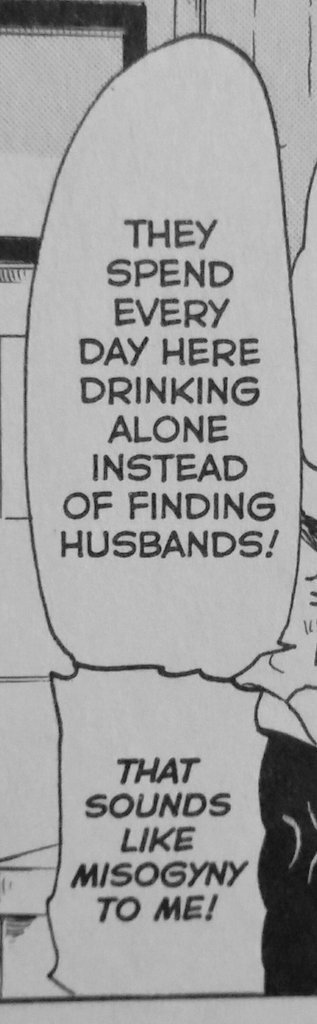
In many ways, Tokyo Tarereba Girls isn’t a happy story. So many women (and I’m sure folks of other genders, as well) feel adrift in a sea of societal expectation. There are so many thinkpieces out there on millennials “choosing” not to buy houses or have children; even if you have no interest in bending to the whims of society, it’s hard to avoid acknowledging that you don’t tick off certain boxes. And yet, Higashimura delivers this anxiety wrapped in the sense of humor that set Princess Jellyfish apart before; there is no attempt to show Rinko and her friends as beautiful paragons of virtue who are underserving of their fate. They are all normal women, with normal lives and normal stresses. They are crass and selfish, women who we might not want to be, but who we recognize in ourselves and in our friends and family.
It is tempting to claim that women like Rinko, who obsess over age, desirability, and the perceived expectations of others, are silly and shallow. Indeed, it is not uncommon to see this kind of criticism even coming from other women. So it was rather refreshing to see, at the back of this first volume, Higashimura’s own beliefs about marriage — essentially, that she fell into it by accident and that she doesn’t put too much weight on its merits. She has pushed back against her friends for their own fears, encouraging them to eschew their anxieties and just live their lives…but then she has also crafted this story highlighting those very real anxieties. She cannot relate to her friends in real life, but she can understand the concerns they have enough to show readers their value.
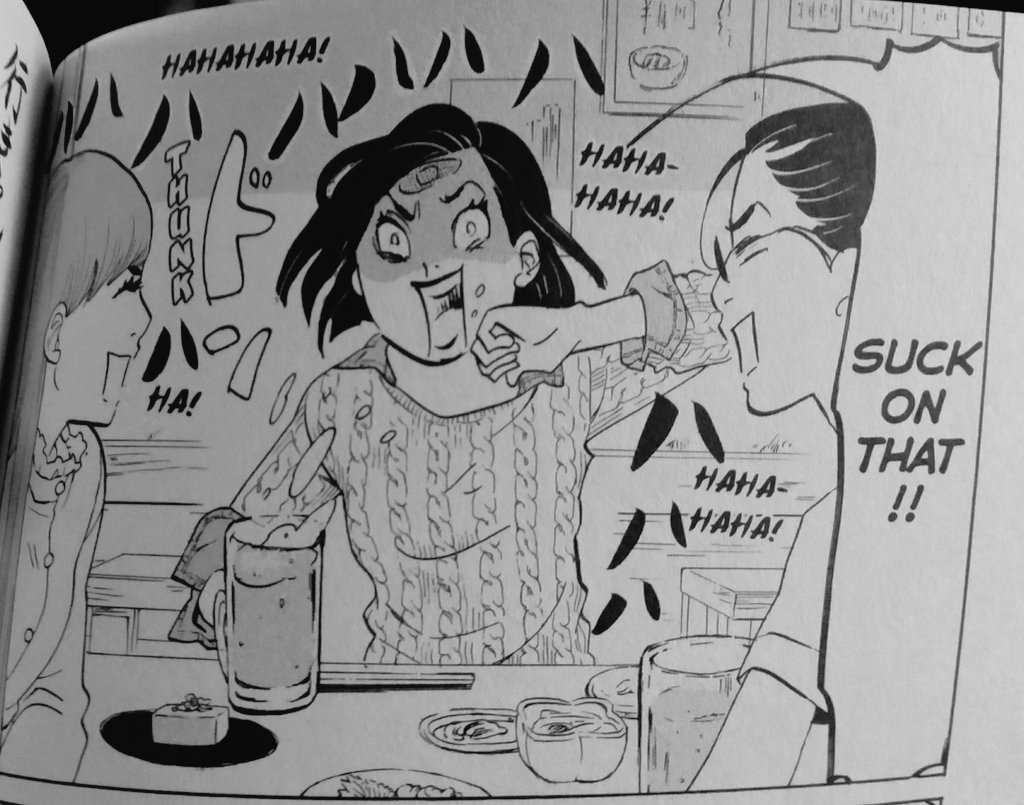
Since manga began legal English-language circulation, there have always been stories centered around adult men and their struggles and fantasies. It is gratifying to know that the girls and women who facilitated the huge manga boom of the late 90s and early aughts now have manga that have grown up with them, with protagonists their age who also may feel adrift, alone, and unwanted as they age and change. I believe that the manga market is ready for more josei and has been for a while now.
Because I’m terrible at keeping up with digital releases, I’m looking very forward to continuing Tokyo Tarareba Girls as it comes out in print. I know that she’s been acknowledged extensively in Japan, but I really hope to see Akiko Higashimura recognized for her genius in the North American market. To that end, I encourage everyone to try her work, whether it be this or Princess Jellyfish. She captures the struggle of being a woman from so many different perspectives and with such sensitivity, without sacrificing either wit or drama. She truly is a spectacular creator.
25 Otaku Facts About Me — From The Manga Hoarder!
One of the bloggers I follow, known as The Manga Hoarder, did a cute little list of 25 otaku facts about herself, which you can find here. Since she invited others to take a crack at it, I thought I’d give it a go. This blog is still fairly new, so I hope this helps to give readers some insight as to who is behind the keyboard.
Without further ado, the list:
1. I’m sure I’m not alone in this, but both my first anime series and my first manga were Sailor Moon.
2. I’m pretty flexible about what genres I read, but my favorites are shonen action from the 90s, horror, BL that isn’t burdened by harmful tropes, and women writing about women’s problems.
3. I…really don’t care at all about Evangelion. I’m sorry. I can recognize its importance, but it does pretty much nothing for me.
4. Yu Yu Hakusho is my favorite series — both anime and manga. You might have been able to tell from my blog’s banner image!
5. It’s only in recent years that I’ve been interested in reading vintage manga, stuff like Hino Horror, etc. I think I was biased as a younger reading toward manga with pretty boys and protagonists that were my age. Now…I want all the weird old stuff.
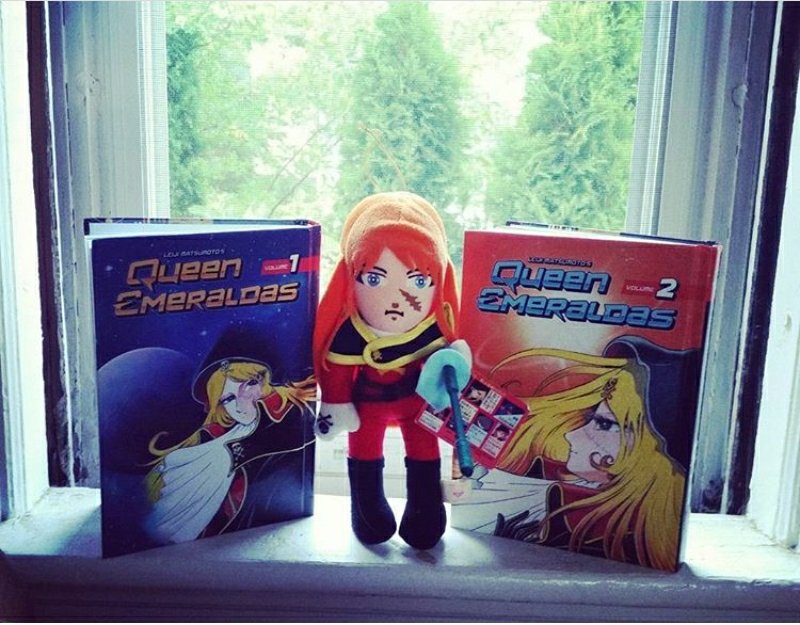
6. I first watched Akira at the tender age of 9, when my best friend brought over her older brother’s VHS copy. We watched it in my basement and prayed that my grandmother wouldn’t interrupt us and demand to know what we were doing!
7. I attended my first convention — the very first Connecticon! — for a friend’s birthday in middle school. Unbeknownst to me, my current boss was also there, selling things! And now I go every year to my home con to sell manga to the next group of nerdlings — I’ve come full circle!
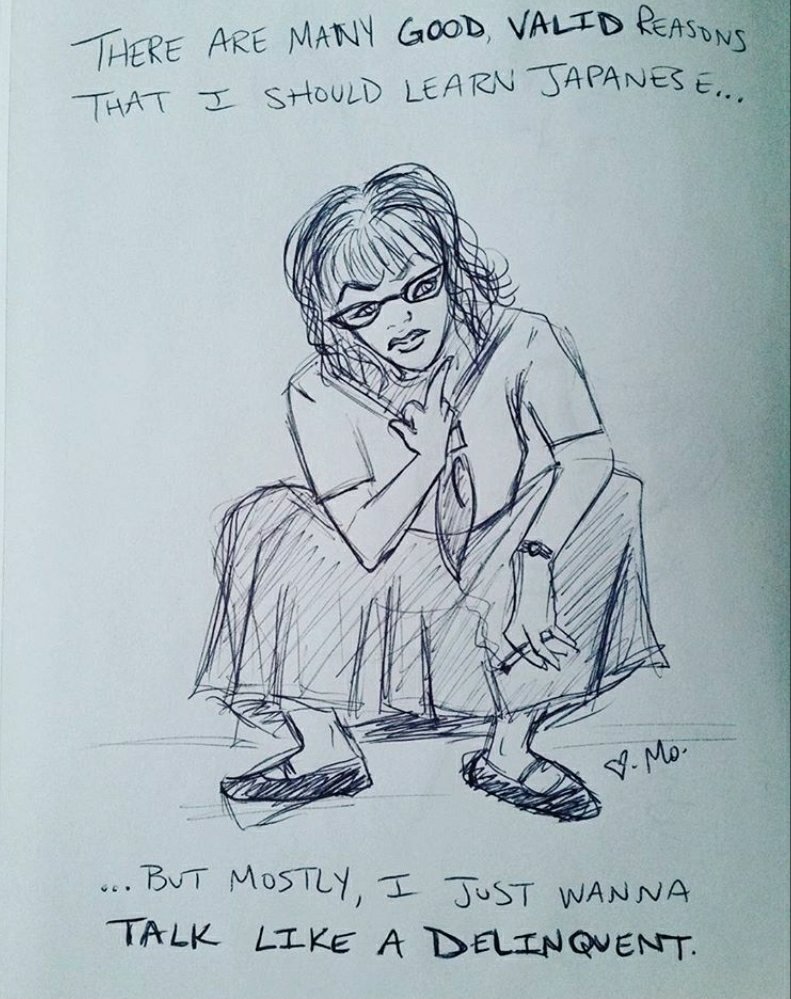
8. I have had several false starts at learning Japanese, but it remains a goal of mine. I’m not sure I’ll ever be completely fluent, but it would be nice to be able to hold a conversation and read some simple things.
9. The yaoi/BL/slash community and the media surrounding/that’s part of it can definitely be…tumultuous? But I’m glad it was available to me at a critical point in my life, because I think it allowed me to think flexibly about sexuality — both my own and other people’s. That’s why, while I’d still like to see better, less harmful BL books coming out, I can’t every really dunk on the genre completely.
10. I like manga better than anime, and consume it far more readily and rapidly.
11. In the last few years I’ve been in the privileged position of being able to increase my manga collection. I know it’s a drop in the bucket compared to some, but I’m hovering somewhere around 500 manga in my collection so far!
12. I desperately want the From Eroica With Love license to get rescused, and for the series to be completed in English!
13. I successfully turned someon into a manga reader by recommending A Silent Voice. She went from knowing nothing about the medium to starting her own collection and attending cons within a few months. When she told me, I was inordinately proud of myself. 😛
14. I didn’t really read any manga during college (which I hear is a common occurrence). When I got back into it, I suddenly felt like I had been missing a part of myself all along. (I felt similarly when I got back to novels after a long time away — I am one of Nature’s bookworms.)
15. I am constantly perplexed by otaku who are really into anime but have no interest in other aspects of Japanese culture. Media isn’t created in a vaccuum, so I always felt the need to delve a little deeper into the backgrounds of the stuff I was consuming.
16. I can’t hear cicadas buzzing without thinking of anime.
17. I really like reading about the manga industry, both in Japan and elsewhere. I have a huge stack of non-fiction books on the subject that I need to read!
18. I have a huge weakenss for artbooks and own a good handful, both Japanese ones and English-language ones. I have exactly zero resistance to any Yoshitaka Amano book.
19. I am also, conceptually at least, fond of boxsets, though I have fewer of those. I did splurge on the Akira manga boxset and have no regrets about that — it’s beautiful.
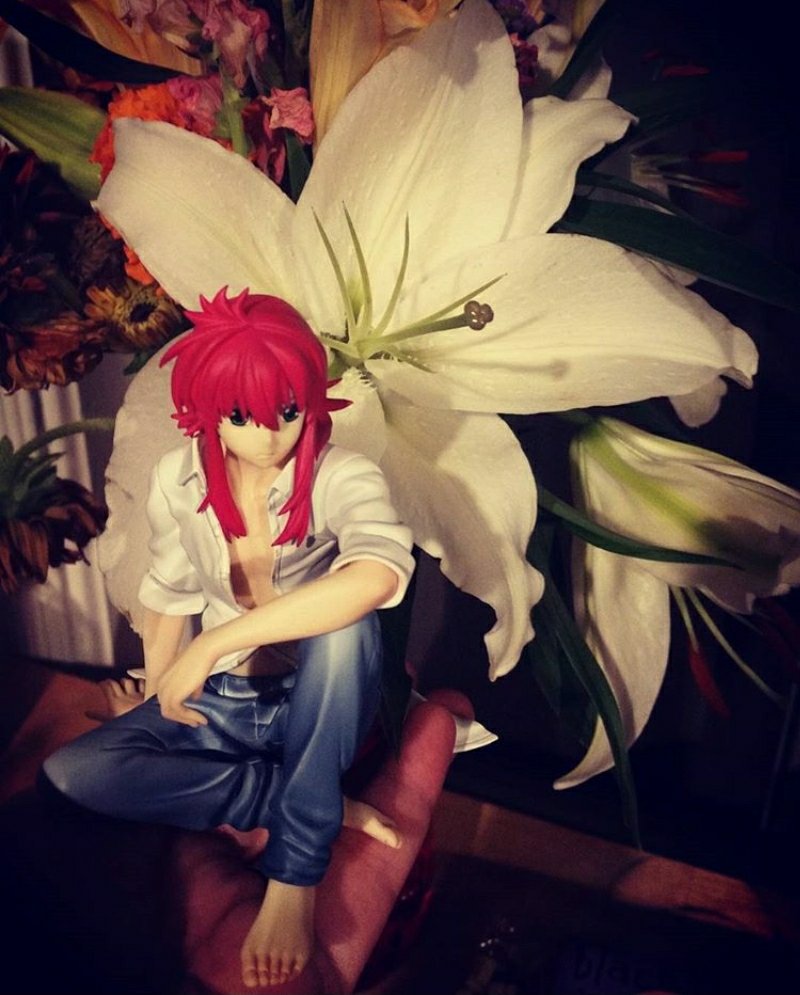
20. I don’t have very many anime figures, and I know what a deep hole that cam become…but I really want some more.
21. I love Vampire Hunter D, but I haven’t read any of the novels yet! I have the first one, I’ve just gotta start.
22. For Christmas a few years ago, my husband got me the Kitaro one-cup sake set. I love the concept of making collector’s items out of otherwise mundane products. Since I’ve drunk the sake (I honestly have no taste for sake), I’ve been thinking of sealing the labels so I can use the cups as little vases or juice glasses.

23. I really love Yu-Gi-Oh!, but I’m a pretty mediocre duelist. I enjoy playing, but I’m much more invested in the story, especially the ancient Egyptian plotline. I wanted to be an archaeologist for a very long time growing up, so this series was like catnip for me.
24. I don’t own a lot of physical anime. I think this is partially because when I was growing up, it was pretty expensive to collect. It’s also very easy to stream things now, so the urgency to own isn’t as great. Plus, I live in a tiny one-bedroom apartment and the books are taking over all the space already! A good handful of the things I do own are on VHS, and I’ll likely never be able to update them as their license has lapsed or the company has since gone out of business.
25. I’m not always super receptive to people giving me recommendations (on anything, not just animanga) if they don’t consider who I am and what I like. But my job is essentially to give folks manga recommendations, and I enjoy doing it! Learning what other series people like and trying to connect the dots to their next favorite series is like a fun puzzle for me…so basically, don’t be afraid to ask me for recs!
And that about wraps it up! It took me a couple days to come up with all these facts. Despite the fact that I’m a pretty open person, it can sometimes be hard for me to write about myself in this way. This was an interesting challenge!
I encourage you all, once again, to go check out The Manga Hoarder; she’s often got really great reviews up, and she’s currently running a readathon and some giveaways!
Comic Book Trivia and Gunpla Fun
I honestly don’t have much to report this week, but since I’ve been keeping up with this blog regularly, I feel loath to break the habit for even just one week, lest I fall behind. The past week at work as been super busy, such that I haven’t felt up to doing too much reading with intent to review, or anything like that.
This weekend has been fun, though! After work on Saturday night, my coworkers and I legged it over to another comic shop for their annual Battle of the Comic Shop All Stars, in which several local comic shops put together teams of four for a comic book-based trivia event to benefit charity. Our team is usually second to last (that’s what we got this year, too), but it’s still super fun and I learn a lot of random facts about first appearances and whatnot. And just for me, this year they had a “name that anime” sheet full of screenshots from various series. I aced it. 😛
When I got home from that, I found that I had received a package from my oldest and best friend. She had had some trouble sending it to me in time for my birthday, but it finally got to me and it was a pair of completely adorable handmade Sailor Jupiter transformation wand earrings!

And then there was today…I drove (by myself for the first time ever!) to the local East Asian supermarket to get a load of snacks for a Gunpla building party that another friend was hosting. The only Gundam series I’ve ever been able to become invested in is Gundam Wing, so naturally I built myself another Sandrock model — this time a Master Grade, which was an interesting exercise in fiddly bits and frustration.

As we were building our models, we listened to some Gundam tracks, and then watched some various Gundam series — including Gundam Wing Endless Waltz. Remember the friend who made me the earrings? Her name is Sara — well, Sara and I used to watch Endless Waltz every single day after school for the better part of a year. It’s deeply important to me, and tied to my reasons for getting into fanfiction, drawing, and animanga as a whole.
I am the type of person who is extremely prone to nostalgia, so I didn’t need all this external help to start reflecting on my past and my passions. In truth, I do it often; I do, professionally, what I did for fun as a teenager basically. I always say that 13-year-old Morgana would think 28-year-old Morgana is so cool, and on some days…that’s really the sentiment that keeps me going.
Working in comics has allowed me to relapse, but not in a bad way. I’ve been able to come back around to things I really care about, and not only am I engaging again in singular, personal hobbies that used to be important to me, I’m also engaging in a community of people with similar hobbies and interests.
The more and more I delve into comics, the more I feel the particular pull of community, and how important I believe it is to have a community that is supportive and uplifting. Conventions like Anime Boston and ConnectiCon, both shows which I do with work, have that feeling of community that I think some of the bigger shows are starting to lack for me. Of course, CTcon is my hometown show, so it’s always going to feel like home. I walk through the Hartford Convention Center and remember that time I was randomly asked to dance by a Vash cosplayer, or that time a bunch of people piled into the lobby to watch AMV Hell.
There are times when I am envious of today’s teenagers; every series they could possibly ask for is at their fingertips, streaming or available to read digitally through so many publishers. At the risk of sounding like an ornery old person, they have no idea how good they have it. I hear complaints about manga chapters not getting translated quickly enough, and I am bowled over by the fact that only fifteen short years ago, literally NOTHING came over to North America with any kind of speed or even decent translation sometimes.
So sometimes I’m envious that kids can buy their anime swag at their local Hot Topic (though I also can partake of that, of course). But there’s also that deeply sentimental side of me that wouldn’t trade the weirdness of growing up in the 90s and 2000s for the world. There is something very beautiful to me about having to wait for a certain time after school to get the next episode of your favorite series, or hunting through the VHS tapes at your local video rental store for something you haven’t already seen (preteen Morgana saw some series at perhaps too impressionable an age).
I don’t particularly truck with the idea that my youth — or anyone else’s — was any better than the youth of kids today. I think a lot of dangerous ideas can come out of dwelling too much in certain kinds of nostalgia. But I’m also grateful for what I had, and I hope that the next generation of nerds finds a similar solace in their own nostalgia without having to tear down the generation that follows. For those of us who love stories, I think memories and the emotions that surround them are important. I don’t think that’s something that changes much, no matter when you were born.